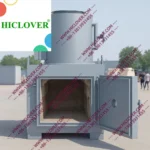
Technical Compendium: HICLOVER Waste Incinerator Systems for Global Regulatory Compliance and Operational Excellence
The HICLOVER waste incinerator represents a critical infrastructure asset for modern, compliant waste management, engineered to meet demanding environmental and operational standards worldwide. These thermal destruction systems are built upon principles of controlled, high-temperature combustion, ensuring the safe and efficient disposal of diverse waste streams. Adherence to strict technical benchmarks, including the HICLOVER waste incinerator dual chamber operating standards, is fundamental to their design, providing the engineering reliability required for applications ranging from medical facilities to remote industrial sites. Operating within a temperature range of 850°C to 1200°C, these systems are designed to achieve complete combustion, minimizing environmental impact and aligning with the stringent frameworks set forth by organizations like the World Health Organization (WHO) and European Union directives. The robust construction and advanced control of these waste incinerators ensure their performance in even the most challenging operational environments.
Foundational Engineering and Combustion Principles
The efficacy of a modern thermal waste destruction system is determined by its core engineering and adherence to fundamental combustion science. HICLOVER systems are predicated on a multi-stage process designed for maximum destruction efficiency and minimal atmospheric emissions. This approach is not merely about burning waste; it is a precisely controlled thermal oxidation process that transforms potentially hazardous materials into inert, sterile ash and cleaned flue gases. This commitment to engineering excellence is a direct result of over 16 years of focused manufacturing and application experience, distinguishing factory-built systems from those sourced through trading companies that lack deep technical expertise. The integration of high-quality materials and process control is paramount to achieving the performance levels required for global compliance and long-term operational viability, especially in sectors facing increasing pressure for ESG compliance and carbon emission reduction.
The Dual Combustion Chamber System
At the heart of every HICLOVER waste incinerator is a dual-chamber combustion system, a design mandated by most international environmental regulations for the treatment of medical, hazardous, and general solid waste. This configuration ensures a complete and controlled destruction process.
- Primary Chamber: Waste is loaded into the primary chamber, which operates under pyrolytic (starved-air) conditions at temperatures typically between 600°C and 850°C. This process thermally decomposes the solid waste into a mixture of combustible gases and solid ash (bottom ash). The controlled, lower-temperature environment minimizes the entrainment of particulate matter into the gas stream, which is a critical first step in emission control.
- Secondary Chamber (Afterburner): The volatile gases produced in the primary chamber are directed into the secondary chamber. Here, an excess of air is introduced, and the temperature is elevated to a minimum of 850°C, often reaching up to 1200°C depending on the waste type. This high-temperature environment, combined with a mandatory gas retention time of at least two seconds, ensures the complete thermal oxidation of harmful organic compounds, pathogens, and odorous gases. This two-second residency is a key standard cited by the WHO for destroying dioxins and furans, rendering the process smokeless and odorless.
This two-stage process is fundamental to achieving high Destruction and Removal Efficiency (DRE), typically exceeding 99.99%, for principal organic hazardous constituents.
Adherence to Global Emission and Temperature Standards
Compliance with international and regional environmental standards is non-negotiable for modern waste incinerators. HICLOVER systems are engineered to meet or exceed key regulatory frameworks, including the EU’s Industrial Emissions Directive (IED), which superseded the Waste Incineration Directive (WID), and specific guidelines from the U.S. Environmental Protection Agency (EPA). These regulations stipulate strict limits on pollutants such as particulate matter (PM), hydrogen chloride (HCl), sulfur dioxide (SO2), nitrogen oxides (NOx), carbon monoxide (CO), and heavy metals. Achieving these standards is directly linked to the precise control of combustion temperature, retention time, and turbulence within the secondary chamber. For a deeper understanding of these complex regulations, a user can review public resources. For example, a search on waste+incinerator+emission+standards+EU provides extensive documentation on the legal requirements governing thermal treatment plants in Europe. The digital automation integrated into HICLOVER systems, particularly through PLC controls, allows for continuous monitoring and adjustment of these parameters to ensure consistent compliance. This capability is increasingly critical for organizations focused on ESG reporting and demonstrating responsible environmental stewardship.
Core Material Science and Thermal Refractory
The longevity and efficiency of a HICLOVER waste incinerator are heavily dependent on the quality of its refractory lining. This material serves multiple critical functions: it must withstand extreme thermal cycling, resist chemical corrosion from acid gases, and provide superior insulation to maintain high internal temperatures while minimizing heat loss. HICLOVER utilizes high-density, high-alumina refractory concrete rated for temperatures well above the maximum operational range. This robust lining ensures structural integrity and optimizes fuel efficiency by retaining thermal energy within the chambers. Proper refractory care is a cornerstone of effective