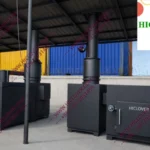
Comprehensive Technical Evaluation of HICLOVER Waste Incinerators: Ensuring Compliance & Engineering Excellence
Within a framework defined by strict industrial standards, **waste incinerators** have become integral to modern waste management strategies. Engineered for robust performance, HICLOVER waste incinerators are recognized for their ability to meet technical temperature standards, maintain engineering reliability, and operate within a temperature range that complies with medical incinerator operating temperature standards, benefiting global applications from a **Chad incinerator manufacturer** to a **Mauritius small animal incinerator** unit. Their performance under dual combustion chambers and high temperature retention is a testament to HICLOVER’s commitment to both environmental and safety regulations.
Technical Standards and Compliance in Waste Incinerator Design
The design of HICLOVER waste incinerators aligns with stringent regulatory references including WHO guidelines and the EU emission frameworks. The combustion principles are founded on achieving complete and efficient waste destruction, where each **waste incinerator** unit undergoes rigorous testing to meet technical temperature standards. The integration of dual combustion chambers provides enhanced control over primary and secondary combustion processes, ensuring that even under variable load conditions, the incinerator maintains a precise temperature range essential for meeting **medical incinerator operating temperature standards**.
Benefits extend towards efficient particulate matter reduction, which is critical under both dry scrubber and wet scrubber options. The engineering materials used are selected for high temperature resistance and long-term durability, thus reinforcing the system’s reliability in areas such as remote mining or oil camps where decentralized waste management is paramount. HICLOVER’s engineering experience supports features like PLC automation and containerized modular systems that can be easily installed in crisis zones and humanitarian camps. For detailed technical insights on this process, further information can be accessed at HICLOVER official website.
Furthermore, compliance with digital automation in industrial equipment is enhanced by using precise sensor technology and reliable control systems. This approach ensures robust system operation in diverse environments such as **Liberia medical incinerator manufacturers** setups, where maintaining consistent high temperatures with efficient flue gas cleaning is of utmost importance.
Combustion Principles, Temperature Control, and Regulatory Integration
HICLOVER waste incinerators operate on combustion principles that emphasize complete oxidation of wastes. The use of dual combustion chambers ensures that methodical temperature regulation is maintained, directly impacting the efficacy of hazardous waste destruction and infectious disease preparedness. The technical configuration is closely monitored to meet strict standards set out in global emission protocols, which is essential in maintaining operational integrity in regions facing carbon emission reduction pressure and ESG compliance initiatives.
The incineration process entails an intricate balance between primary waste combustion and secondary afterburning. Each unit is engineered to sustain high temperature retention within the designated range – a critical factor under medical incinerator secondary chamber temperature standard requirements. For real-life comparisons, one may refer to this detailed resource: medical incinerator secondary chamber temperature standard. Such benchmarks are essential in evaluating the performance of both fixed and containerized incinerators, especially in settings that require a **smart ash incinerator** integrated with sound environmental control systems.
Evaluating Incinerator Types and Industrial Control Systems
The market for waste incinerators encompasses a wide range of models, including **commercial waste incinerator system for clinics** that demand precision and reliability in managing critical waste streams. In-depth comparisons of incinerator types reveal that containerized models, like HICLOVER’s mobile plug-and-play design, offer benefits in terms of installation speed and adaptability to remote sites. These systems are distinguished by PLC automation against manual control options, delivering higher operational consistency and traceability.
Manufacturers such as those offering a **Chad incinerator manufacturer** solution or a **Mauritius small animal incinerator** model have optimized their incineration processes to adhere to strict emission controls and technical temperature standards. The option for both dry and wet scrubbers facilitates compliance with regional emission regulations, thus positioning these systems favorably in global markets. Among the technical considerations, dual combustion chambers, precise PLC control, and adaptive fuel strategies using diesel, LPG, or natural gas are core enablers of these advanced solutions.
From the perspective of production, HICLOVER highlights the distinct advantage of factory manufacturing capabilities. Unlike trading companies, HICLOVER emphasizes stable supply chain resilience and consistent engineering experience, which guarantee reliable customizations such as variable chamber volumes and modular system configurations to suit